







Pollinator of Fall and Winter Flowering Witchhazels
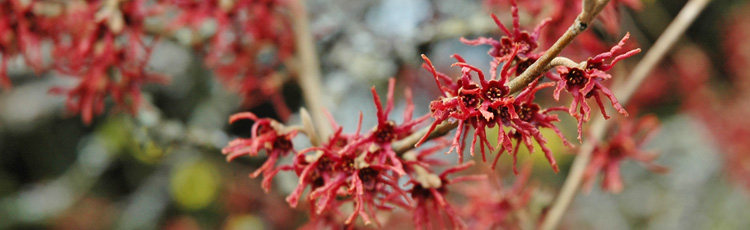
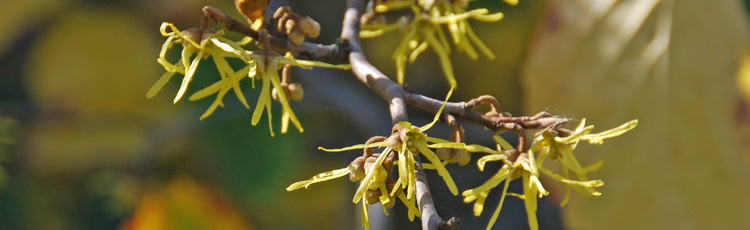
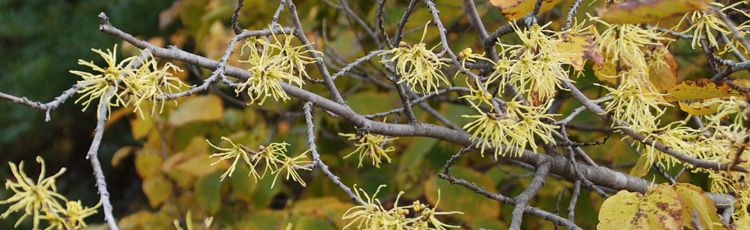
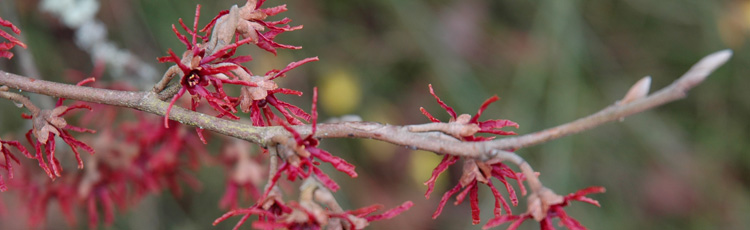
As temperatures warm pollinators get busy visiting flowers, sipping nectar and transferring pollen. But have you ever wondered how our fall and winter blooming witchhazels (Hamamelis) get pollinated when temperatures are cool and insect activity is minimal?
It’s the shivering winter moth that pollinates these plants. This night flying moth is able to raise its body temperature to 50 degrees with intense bouts of shivering. It takes them just a few minutes to warm their bodies on warm days and nearly 30 minutes when the temperatures are near freezing. Even more amazing is their ability to restrict this heat build up to their wing muscles.
The shivering winter moth lives beneath the leaf litter. This insulated habitat, along with hair-like scales that cover their body and their ability to manage the heat they generate allow them to function in colder temperatures.
A bit more information: Once the flowers are pollinated, fertilization is delayed until spring and seeds ripen in fall. Once the seeds are ripe the seed capsule breaks open and ejects the seeds as far as 25 feet from the plant. It’s certainly an effective way to get your offspring to leave home.
Related
Article
Article
Categories
Upcoming Live Events
& Webinars
Nov. 8, 2025
Winter Container Gardens
Pasquesi Home & Gardens
Lake Bluff, IL
WATCH ON-DEMAND WEBINARS
Learn More
Book an Appearance

Enter for the chance to win a Garden to the Max book!
ENTER NOW

