Sooty Mold
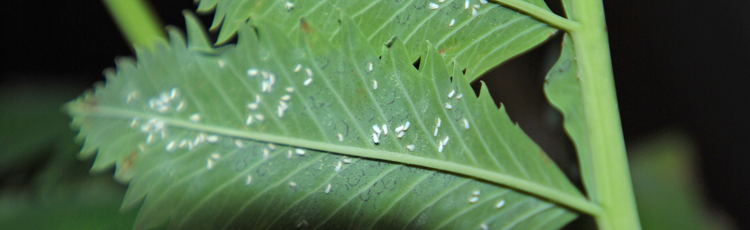
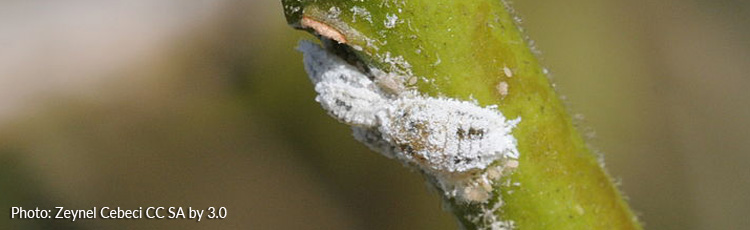
A black sooty covering on leaves, twigs and stems of plants usually indicates the presence of aphids, mites, scale, whiteflies or other insects that feed by sucking plant sap.
Sucking insects ingest more plant sap than they can digest and secrete the excess as honeydew. The sooty mold fungi grow on the sugary honeydew, but don’t infect the plant. The problem arises when the sooty mold covers the leaves preventing the plant from capturing sunlight for photosynthesis.
If nature is not controlling these pests and sooty mold is a problem, you may need to lend a hand. Dislodge small populations of aphids and mites with a strong blast of water. Use insecticidal soap to kill soft-bodied insects it contacts and wash off the sooty mold. A lightweight horticulture oil can control these as well as scale, mealybugs and other insects. As always, read and follow label directions.
A bit more information: You may notice ants feeding on the honeydew. They help protect the honeydew producing insects, their food source, from natural predators. Controlling the sucking insects will help manage the ants. As always, read and follow label directions when using any pesticide, organic or synthetic.
Related
Article
Article
Article
Article
Categories
Upcoming Live Events
& Webinars
April 27, 2024
Ridges & Rivers Book Festival
Viroqua, WI
Register now
April 28, 2024
Flowering Trees and Shrubs
Ebert's Greenhouse Village, Ixonia, WI
May 1, 2024
FREE WEBINAR
Ornamental Fruits and Vegetables
Register now
May 4, 2024
Garden U 2024
New Richmond, WI
Register now
May 9, 2024
FREE WEBINAR
How to Plant Your Rain Garden
Register now
May 11, 2024
Ask The Plant Doctor Q & A
Ebert's Greenhouse Village, Ixonia, WI
May 12, 2024
Ask The Plant Doctor Q & A
Ebert's Greenhouse Village, Ixonia, WI
May 18, 2024
Ask The Plant Doctor Q & A
Ebert's Greenhouse Village, Ixonia, WI
June 1, 2024
Selecting, Planting, Pruning and Caring for Hydrangeas
Ebert's Greenhouse Village, Ixonia, WI
June 5, 2024
FREE WEBINAR
Under-Appreciated Pollinators
Register now
WATCH ON-DEMAND WEBINARS
Learn More
Book an Appearance

Enter to Win The Birds & Blooms' Ultimate Gardening Guide !