Control Scale Insects on Houseplants
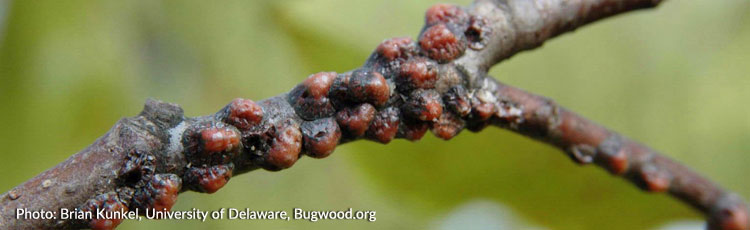
Bumps on the leaves and stems of your houseplants indicate scale insects have moved in and are feasting on these plants.
Scale insects suck plant juices, causing leaves to yellow, brown and become distorted. These pests secrete a clear sticky substance called honeydew. Large populations eventually weaken and can even kill some plants.
You will need to be persistent to control these pests. Their hard shells are impervious to most pesticides.
Start by gently scraping the hard-shelled insects off the plant with an old toothbrush or your thumbnail. Check the upper and lower leaf surfaces and all along the stems.
Then spray the plant with insecticidal soap to kill the immature insects that have not yet formed their hard pesticide-resistant shells. Or use a horticulture oil, like Summit Year-Round Spray Oil that kills all stages of this pest.
A bit more information: Be sure to read and follow label directions when using any chemicals including organic, natural and synthetic products.
Related
Categories
Upcoming Live Events
& Webinars
April 27, 2024
Ridges & Rivers Book Festival
Viroqua, WI
Register now
April 28, 2024
Flowering Trees and Shrubs
Ebert's Greenhouse Village, Ixonia, WI
May 1, 2024
FREE WEBINAR
Ornamental Fruits and Vegetables
Register now
May 4, 2024
Garden U 2024
New Richmond, WI
Register now
May 9, 2024
FREE WEBINAR
How to Plant Your Rain Garden
Register now
May 11, 2024
Ask The Plant Doctor Q & A
Ebert's Greenhouse Village, Ixonia, WI
May 12, 2024
Ask The Plant Doctor Q & A
Ebert's Greenhouse Village, Ixonia, WI
May 18, 2024
Ask The Plant Doctor Q & A
Ebert's Greenhouse Village, Ixonia, WI
June 1, 2024
Selecting, Planting, Pruning and Caring for Hydrangeas
Ebert's Greenhouse Village, Ixonia, WI
June 5, 2024
FREE WEBINAR
Under-Appreciated Pollinators
Register now
WATCH ON-DEMAND WEBINARS
Learn More
Book an Appearance

Enter to Win The Birds & Blooms' Ultimate Gardening Guide !